

As a skincare professional, I’ve worked with a range of chemical peels from lactic and mandelic to more advanced options like TCA. But as science evolves, so should the tools we use in the treatment room. One acid gaining attention in professional skincare is monochloroacetic acid (MCA).
If you’re searching for an alternative to TCA peels or want a chemical peel that offers more control with less inflammation, this guide compares TCA vs MCA to help you choose the right option for your protocols.

What Is TCA?
Trichloroacetic acid (TCA) is one of the most well-known acids in medium-depth chemical peels. It's used to treat pigment, texture irregularities, and signs of aging by coagulating proteins and triggering controlled damage to the epidermis and upper dermis.
Depending on the concentration and formulation, results can range from moderate exfoliation to deeper resurfacing. Buffered or biostimulatory peels have helped reduce downtime while maintaining effectiveness, which is a big reason they’re widely used today.
But even with advancements, TCA presents some challenges. It tends to diffuse laterally, making it harder to control. There’s also a higher risk of post-inflammatory hyperpigmentation (PIH), particularly in Fitzpatrick IV–VI skin, and inflammation can linger longer than desired in sensitive or compromised skin types.
For some clients, those risks are worth it. For others, they’re not.
What Is MCA?
Monochloroacetic acid (MCA) is often grouped into the same category as TCA, but the two acids behave very differently on the skin. MCA is a modified carboxylic acid with more controlled penetration and less lateral spread. That means it tends to stay where you place it, offering better precision and fewer surprises.
In clinical use, MCA allows for effective protein coagulation with less inflammatory trauma. That’s important when you’re working on already compromised skin or trying to minimize pigment risk.
MCA doesn’t rely on traditional frosting as a visual endpoint either. This gives you more flexibility in designing protocols that prioritize skin integrity, especially when paired with regenerative ingredients.

Key Differences Between TCA and MCA
TCA (Trichloroacetic Acid):
- Penetration: Diffuses laterally, making depth harder to control
- Downtime: Can range from moderate to significant, depending on the formula
- Visual Endpoint: Typically frosting-dependent
- PIH Risk: Higher in Fitzpatrick IV–VI skin types
- Best For: Textural resurfacing and aging concerns
MCA (Monochloroacetic Acid):
- Penetration: Vertical and controlled, stays where it's placed
- Downtime: Generally milder and easier for clients to tolerate
- Visual Endpoint: Minimal frosting, more flexibility in protocol design
- PIH Risk: Lower, especially when paired with supportive post-care
- Best For: Pigment-prone skin, inflammation-sensitive clients, or those with compromised barriers
Why I Started Exploring MCA-Based Peels
What drew me to MCA wasn’t just the acid. It was the way it shifted my entire approach to peels. I wanted a treatment that respected the skin’s structure while still delivering visible change. That’s when I came across formulations that paired MCA with barrier-supportive ingredients like colostrum.
Colostrum is naturally rich in growth factors, immunoglobulins, and skin-repairing compounds. When used after a controlled injury like a peel, it helps speed up recovery and reduces the likelihood of complications like PIH or prolonged redness.
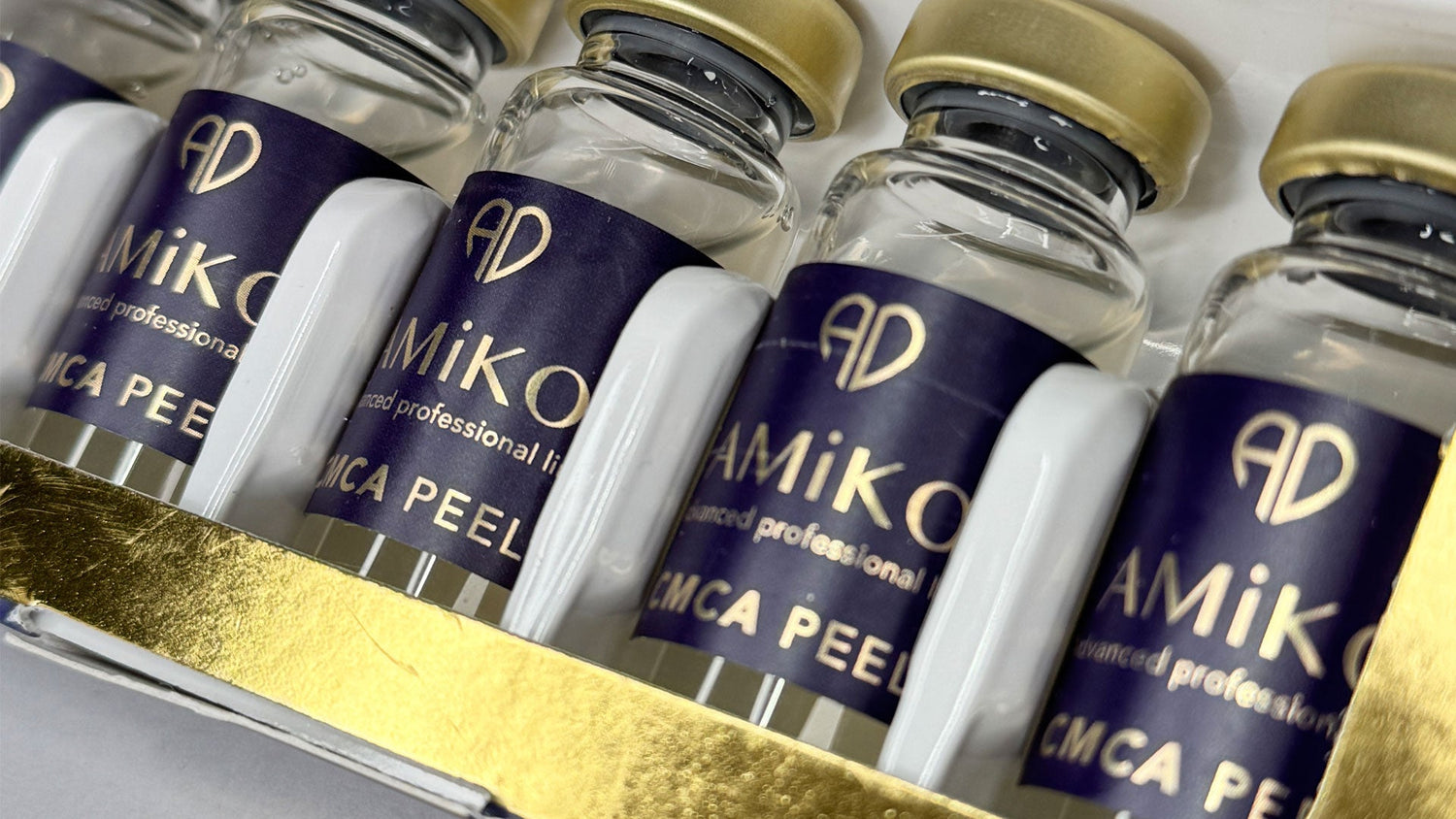
With the AMiKO CMCA Peel, MCA handles exfoliation and remodeling, while colostrum supports healing from the very first step. It’s a combination that has made a noticeable difference in outcomes, especially for clients with sensitivity, compromised barriers, or pigment concerns.
This balance has allowed me to offer a high-impact peel with a gentler post-treatment experience. Clients are more comfortable, healing is faster, and results are consistently impressive.

Why This Matters: Regulatory Updates and the Future of TCA
Another reason to start thinking ahead is regulation. In Canada, TCA is already on the Cosmetic Ingredient Hotlist and is not permitted in over-the-counter skincare products or peels intended for cosmetic use.
In the United States, California has passed legislation banning TCA in cosmetics starting January 2027 under the Toxic-Free Cosmetics Act (AB 496). While this doesn’t apply to all states yet, it signals a shift in how TCA may be regulated nationwide.
For professionals looking to future-proof their practice, MCA offers a compliant, clinically effective alternative. It aligns with emerging safety trends while continuing to deliver high-performance results.
Final Thoughts for Practitioners
Choosing the right peel isn’t just about strength or depth. It’s about understanding how each acid interacts with the skin and what kind of support it needs post-treatment.
TCA might still have a place in certain protocols, but MCA is proving to be a valuable option, especially when you're looking for precision, lower inflammation, and faster recovery.
If you’re a licensed professional exploring ways to evolve your peel offerings, MCA is worth considering. Not every formula is created equal, but when combined with the right recovery system, it can deliver transformative results without the same level of trauma.
